How Do Podiatrists Remove Ingrowns?

October 14, 2025

Ingrown toenails are a common but painful problem that can make even the simplest tasks like walking or wearing shoes uncomfortable. Many people try home remedies first, but when the pain becomes severe or infection sets in, a podiatrist is the right professional to help.

At Vital Podiatry Foot and Ankle Specialist, we often see patients who have tried trimming their toenails at home, only to make the problem worse. So, how exactly does a podiatrist remove an ingrown toenail, and what can you expect during and after the procedure? Let’s break down the process clearly and thoroughly.
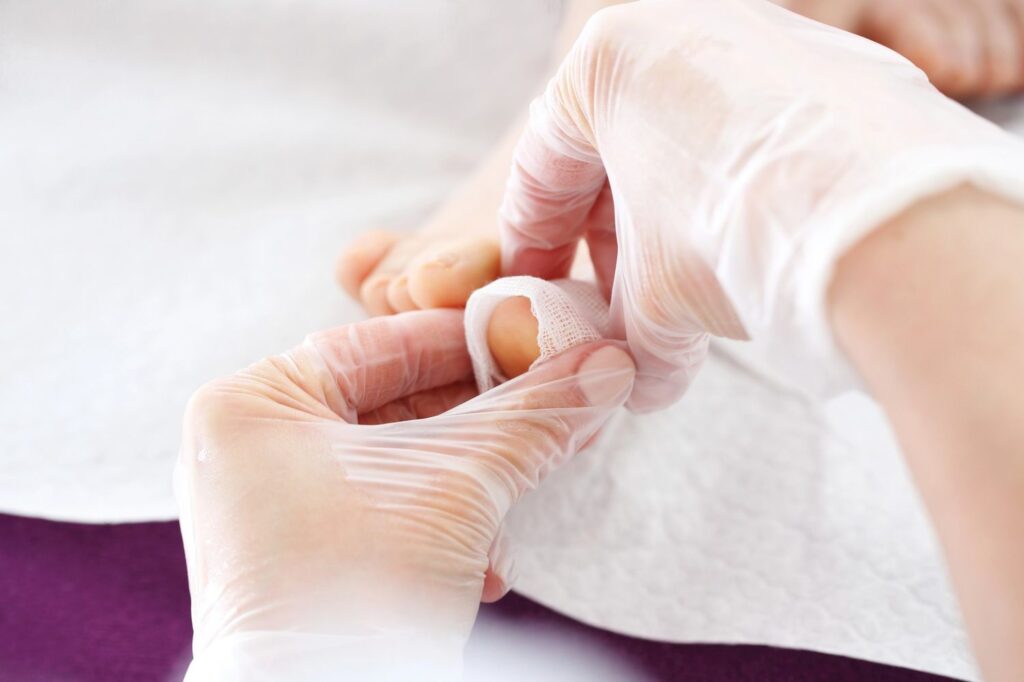
Podiatrist ingrown toenail care with sterile bandage application to protect toe and support healing in clinical setting.

Understanding Ingrown Toenails

Before discussing how podiatrists remove ingrowns, it’s important to understand what causes them and why they can be painful.

An ingrown toenail occurs when the edge of the nail grows into the surrounding skin instead of above it. This condition usually affects the big toe but can happen on any toe. The area becomes red, swollen, and tender and in some cases, it may develop an infection that produces pus or drainage.

Common Causes of Ingrown Toenails

Several factors can contribute to the development of ingrown toenails:

  • Improper Nail Trimming: Cutting toenails too short or rounding the edges can cause the nail to curve into the skin.
  • Tight Footwear: Shoes that squeeze the toes can push the nail edge into the skin.
  • Injury: Stubbing or dropping something on your toe may cause abnormal nail growth.
  • Genetic Factors: Some people have naturally curved nails that are more prone to growing inward.
  • Poor Foot Hygiene: Moist environments can soften the skin, making it easier for nails to pierce through.

When to See a Podiatrist for an Ingrown Toenail

Not all ingrown toenails need medical intervention. In mild cases, soaking the foot in warm salt water and wearing open-toed shoes can help. However, you should visit a podiatrist if you notice:

  • Persistent or worsening pain
  • Swelling and redness that spreads
  • Signs of infection (pus, bad odor, warmth)
  • Recurrent ingrown toenails
  • Diabetes or poor circulation

A podiatrist ingrown toenail treatment is especially important for patients with diabetes or nerve damage, as infections can lead to more serious complications if left untreated.

How Podiatrists Diagnose an Ingrown Toenail

Diagnosis is usually straightforward. During your visit to Vital Podiatry Foot and Ankle Specialist, the podiatrist will:

  1. Inspect the Toe: Checking for swelling, redness, discharge, and nail curvature.
  2. Assess Infection: If pus or tissue inflammation is present, the doctor may prescribe antibiotics before or after treatment.
  3. Review Medical History: Understanding your general health helps guide treatment—especially if you have diabetes or circulation issues.

Once diagnosed, the podiatrist will determine whether conservative care or a minor surgical procedure is best.

How Podiatrists Remove Ingrown Toenails

Now to the main question: how do podiatrists remove ingrowns? The treatment depends on how severe the condition is. Below are the most common methods used by professionals.

1. Conservative (Non-Surgical) Treatment

If the ingrown toenail is mild and caught early, a podiatrist may try non-surgical options to relieve pain and guide proper nail growth.

Typical conservative treatments include:

  • Soaking and Cleaning: The podiatrist may recommend soaking the toe in warm water with antiseptic solutions.
  • Lifting the Nail Edge: Using a sterile tool, the podiatrist may gently lift the nail corner and place a small piece of cotton or dental floss underneath. This helps the nail grow above the skin instead of into it.
  • Topical or Oral Medications: Antibiotic ointments and anti-inflammatory creams may be prescribed to reduce infection and swelling.

This approach is effective for mild cases, but if the nail repeatedly grows inward, more permanent methods are needed.

2. Partial Nail Avulsion (Partial Nail Removal)

This is one of the most common podiatric procedures for moderate to severe ingrown toenails. It’s quick, relatively painless, and performed in the clinic under local anesthesia.

Step-by-Step Overview:

  1. Local Anesthesia: The podiatrist injects a numbing agent into the toe so the patient feels no pain.
  2. Sterile Preparation: The area is cleaned thoroughly to prevent infection.
  3. Partial Nail Removal: Using sterile instruments, the podiatrist removes only the affected edge of the nail.
  4. Chemical Matrixectomy (Optional): To prevent regrowth, a chemical solution such as phenol or sodium hydroxide may be applied to the nail root.
  5. Dressing and Bandaging: The toe is bandaged, and the patient is given aftercare instructions.

The result is a thinner nail that grows normally without digging into the skin again.

3. Total Nail Avulsion (Complete Nail Removal)

In some cases, especially if the entire nail is infected, thickened, or repeatedly ingrown, the podiatrist may remove the entire nail plate.

The process involves:

  • Numbing the toe with local anesthesia
  • Removing the full nail plate from the nail bed
  • Optionally applying a chemical to stop nail regrowth

Though the nail may take several months to regrow, this procedure effectively eliminates recurring ingrown toenail issues.

4. Surgical Matrixectomy (Permanent Solution)

For chronic cases, a surgical matrixectomy may be performed. This procedure permanently removes part of the nail root (matrix), preventing regrowth of the ingrown portion.

It’s often chosen for patients who experience frequent ingrown toenails despite prior treatments. While it’s a small outpatient surgery, it provides a long-term solution to recurring discomfort and infections.

What to Expect After an Ingrown Toenail Removal

Recovery after a podiatrist ingrown toenail procedure is usually smooth and quick if proper aftercare is followed.

Immediate Aftercare

  • Keep the foot elevated for a few hours to reduce swelling.
  • Change the dressing as advised by your podiatrist.
  • Take over-the-counter pain medication if needed.
  • Avoid tight shoes or high heels for a few days.

Healing Time

  • Partial nail removal: 2 to 4 weeks for full healing.
  • Total nail removal: 6 to 8 weeks depending on nail regrowth rate.
  • Chemical or surgical matrixectomy: A few additional weeks for the tissue to completely recover.

During this period, keeping the area clean and dry is essential to prevent infection.

Can an Ingrown Toenail Come Back After Removal?

In some cases, yes. If only a portion of the nail is removed and the matrix is left untreated, the nail may grow inward again. That’s why many podiatrists perform a chemical matrixectomy to reduce the chance of recurrence.

However, long-term results also depend on your habits:

  • Trim nails straight across, not curved.
  • Wear properly fitting shoes.
  • Avoid picking at your nails or skin.

At Vital Podiatry Foot and Ankle Specialist, we educate patients about proper nail care to help them avoid recurring issues.

Podiatrist ingrown toenail treatment for bruised nail with protective bandage in sterile medical care environment.

Is Ingrown Toenail Removal Painful?

This is one of the most common concerns patients have before visiting a podiatrist. Thankfully, the procedure is virtually painless due to local anesthesia. You might feel a slight pinch from the injection, but the treatment itself is comfortable.

After the anesthesia wears off, some mild soreness can occur for a day or two, which can be managed with standard pain relievers. Most patients can return to their regular activities within 24 to 48 hours.

The Benefits of Seeing a Podiatrist for Ingrown Toenails

Trying to fix an ingrown toenail at home with unsterilized tools or aggressive trimming can make the condition worse. A podiatrist has the proper training, tools, and sterile techniques to treat it safely.

Key Benefits Include:

  • Proper diagnosis and treatment
  • Pain-free procedures under local anesthesia
  • Reduced risk of infection or recurrence
  • Guidance on prevention and nail care

Choosing professional care ensures your foot heals properly and your risk of future ingrown toenails is minimized.

Why Choose Vital Podiatry Foot and Ankle Specialist

At Vital Podiatry Foot and Ankle Specialist, we take a patient-centered approach to ingrown toenail treatment. Our podiatrists are experienced in diagnosing and treating all levels of severity from mild irritation to severe infections requiring surgical care.

We use modern, sterile equipment and minimally invasive techniques that promote fast recovery and long-lasting relief. Whether it’s your first ingrown toenail or a recurring problem, we provide solutions tailored to your needs and comfort.

Say Goodbye to Ingrown Toenail Pain — Trusted Podiatrist Near Meadows of Northwest Park

Dealing with a painful ingrown toenail that just won’t heal? Don’t wait until it gets worse. At Vital Podiatry Foot and Ankle Specialist, we provide expert care for ingrown toenails right near Meadows of Northwest Park helping you walk comfortably again without the pain or risk of infection.

Our podiatrists use gentle, precise techniques to treat ingrown toenails safely and effectively, whether you need a simple edge correction or a minor in-office procedure. We focus on long-term relief by addressing the root cause, not just the symptoms.

Why patients around Meadows of Northwest Park choose us:

Board-Certified Podiatrists experienced in advanced foot and nail treatments

Comfort-First Approach using modern, minimally invasive care

Quick Relief for pain, swelling, and infection

Personalized Aftercare to prevent future ingrowns

Don’t let a small problem turn into a big one. Visit Vital Podiatry Foot and Ankle Specialist today your trusted podiatrist for ingrown toenail treatment near Meadows of Northwest Park. Step into comfort and confidence with every visit.

Vital Podiatry Foot and Ankle Specialist Serving the Meadows Of Northwest Park Community and Beyond in Houston

Vital Podiatry Foot and Ankle Specialist is dedicated to serving the diverse needs of the local community of Houston, including individuals residing in neighborhoods like Meadows Of Northwest Park. With its convenient location near landmarks such as The Church At Willow Park and major intersections like N Houston Rosslyn Rd and Smiling Woods Ln (coordinates: 29.91757,-95.49233), we offer podiatrist ingrown toenail services.

Get Podiatrist Ingrown Toenail Services At Meadows Of Northwest Park Now

CALL US NOW!

(281) 937-4546

Navigate from Meadows Of Northwest Park to Vital Podiatry Foot and Ankle Specialist Now

Final Thoughts

Ingrown toenails may seem like a small issue, but they can cause significant discomfort and lead to infection if ignored. Fortunately, a podiatrist can remove ingrowns safely and effectively using advanced methods such as partial nail avulsion, chemical matrixectomy, or surgical removal.

If you’re experiencing pain, swelling, or recurring ingrown toenails, professional help is the best next step. Vital Podiatry Foot and Ankle Specialist is here to help you walk comfortably again with safe, effective, and lasting treatments.

FAQs

1. What does a podiatrist do for an ingrown toenail?

A podiatrist carefully removes the part of the nail that’s growing into the skin, reducing pain and preventing infection. Depending on the severity, the treatment may include gently lifting the nail edge, partially removing the nail, or performing a minor in-office procedure. At Vital Podiatry Foot and Ankle Specialist, we use safe, sterile methods to ensure quick healing and long-term comfort.

2. Is it painful to have an ingrown toenail removed by a podiatrist?

No. The procedure is performed under local anesthesia, so you won’t feel pain while the podiatrist works on your toe. You may experience mild soreness afterward, but most patients return to normal activities within a day or two. Our team at Vital Podiatry Foot and Ankle Specialist focuses on making every treatment as comfortable as possible.

3. How long does it take to heal after ingrown toenail removal?

Healing time depends on the type of procedure. For a partial nail removal, recovery usually takes 2–4 weeks, while a total nail removal may take up to 8 weeks. Patients treated at Vital Podiatry Foot and Ankle Specialist receive detailed aftercare instructions to help speed up healing and prevent infection.

4. Can an ingrown toenail come back after podiatrist treatment?

It can, but a podiatrist can reduce the chances of recurrence by treating the nail root (matrix) with a chemical or surgical method. At Vital Podiatry Foot and Ankle Specialist, we assess whether a temporary or permanent solution is best for you to prevent future ingrown toenail issues.

5. When should I see a podiatrist for an ingrown toenail?You should see a podiatrist if you experience constant pain, redness, swelling, or drainage around your nail. People with diabetes, circulation problems, or recurring ingrown toenails should seek treatment right away. Vital Podiatry Foot and Ankle Specialist provides prompt and professional care for patients near Meadows of Northwest Park, ensuring your feet stay healthy and pain-free.

TAKE YOUR FIRST STEP

OR CALL US

(281) 937-4546

Related Post


Ingrown toenails are a common but painful problem that can make even the simplest tasks like walking or wearing shoes uncomfortable. Many people try home remedies first, but when the pain becomes severe or infection sets in, a podiatrist is the right professional to help.

At Vital Podiatry Foot and Ankle Specialist, we often see patients who have tried trimming their toenails at home, only to make the problem worse. So, how exactly does a podiatrist remove an ingrown toenail, and what can you expect during and after the procedure? Let’s break down the process clearly and thoroughly.

Podiatrist ingrown toenail care with sterile bandage application to protect toe and support healing in clinical setting.

Understanding Ingrown Toenails

Before discussing how podiatrists remove ingrowns, it’s important to understand what causes them and why they can be painful.

An ingrown toenail occurs when the edge of the nail grows into the surrounding skin instead of above it. This condition usually affects the big toe but can happen on any toe. The area becomes red, swollen, and tender and in some cases, it may develop an infection that produces pus or drainage.

Common Causes of Ingrown Toenails

Several factors can contribute to the development of ingrown toenails:

  • Improper Nail Trimming: Cutting toenails too short or rounding the edges can cause the nail to curve into the skin.
  • Tight Footwear: Shoes that squeeze the toes can push the nail edge into the skin.
  • Injury: Stubbing or dropping something on your toe may cause abnormal nail growth.
  • Genetic Factors: Some people have naturally curved nails that are more prone to growing inward.
  • Poor Foot Hygiene: Moist environments can soften the skin, making it easier for nails to pierce through.

When to See a Podiatrist for an Ingrown Toenail

Not all ingrown toenails need medical intervention. In mild cases, soaking the foot in warm salt water and wearing open-toed shoes can help. However, you should visit a podiatrist if you notice:

  • Persistent or worsening pain
  • Swelling and redness that spreads
  • Signs of infection (pus, bad odor, warmth)
  • Recurrent ingrown toenails
  • Diabetes or poor circulation

A podiatrist ingrown toenail treatment is especially important for patients with diabetes or nerve damage, as infections can lead to more serious complications if left untreated.

How Podiatrists Diagnose an Ingrown Toenail

Diagnosis is usually straightforward. During your visit to Vital Podiatry Foot and Ankle Specialist, the podiatrist will:

  1. Inspect the Toe: Checking for swelling, redness, discharge, and nail curvature.
  2. Assess Infection: If pus or tissue inflammation is present, the doctor may prescribe antibiotics before or after treatment.
  3. Review Medical History: Understanding your general health helps guide treatment—especially if you have diabetes or circulation issues.

Once diagnosed, the podiatrist will determine whether conservative care or a minor surgical procedure is best.

How Podiatrists Remove Ingrown Toenails

Now to the main question: how do podiatrists remove ingrowns? The treatment depends on how severe the condition is. Below are the most common methods used by professionals.

1. Conservative (Non-Surgical) Treatment

If the ingrown toenail is mild and caught early, a podiatrist may try non-surgical options to relieve pain and guide proper nail growth.

Typical conservative treatments include:

  • Soaking and Cleaning: The podiatrist may recommend soaking the toe in warm water with antiseptic solutions.
  • Lifting the Nail Edge: Using a sterile tool, the podiatrist may gently lift the nail corner and place a small piece of cotton or dental floss underneath. This helps the nail grow above the skin instead of into it.
  • Topical or Oral Medications: Antibiotic ointments and anti-inflammatory creams may be prescribed to reduce infection and swelling.

This approach is effective for mild cases, but if the nail repeatedly grows inward, more permanent methods are needed.

2. Partial Nail Avulsion (Partial Nail Removal)

This is one of the most common podiatric procedures for moderate to severe ingrown toenails. It’s quick, relatively painless, and performed in the clinic under local anesthesia.

Step-by-Step Overview:

  1. Local Anesthesia: The podiatrist injects a numbing agent into the toe so the patient feels no pain.
  2. Sterile Preparation: The area is cleaned thoroughly to prevent infection.
  3. Partial Nail Removal: Using sterile instruments, the podiatrist removes only the affected edge of the nail.
  4. Chemical Matrixectomy (Optional): To prevent regrowth, a chemical solution such as phenol or sodium hydroxide may be applied to the nail root.
  5. Dressing and Bandaging: The toe is bandaged, and the patient is given aftercare instructions.

The result is a thinner nail that grows normally without digging into the skin again.

3. Total Nail Avulsion (Complete Nail Removal)

In some cases, especially if the entire nail is infected, thickened, or repeatedly ingrown, the podiatrist may remove the entire nail plate.

The process involves:

  • Numbing the toe with local anesthesia
  • Removing the full nail plate from the nail bed
  • Optionally applying a chemical to stop nail regrowth

Though the nail may take several months to regrow, this procedure effectively eliminates recurring ingrown toenail issues.

4. Surgical Matrixectomy (Permanent Solution)

For chronic cases, a surgical matrixectomy may be performed. This procedure permanently removes part of the nail root (matrix), preventing regrowth of the ingrown portion.

It’s often chosen for patients who experience frequent ingrown toenails despite prior treatments. While it’s a small outpatient surgery, it provides a long-term solution to recurring discomfort and infections.

What to Expect After an Ingrown Toenail Removal

Recovery after a podiatrist ingrown toenail procedure is usually smooth and quick if proper aftercare is followed.

Immediate Aftercare

  • Keep the foot elevated for a few hours to reduce swelling.
  • Change the dressing as advised by your podiatrist.
  • Take over-the-counter pain medication if needed.
  • Avoid tight shoes or high heels for a few days.

Healing Time

  • Partial nail removal: 2 to 4 weeks for full healing.
  • Total nail removal: 6 to 8 weeks depending on nail regrowth rate.
  • Chemical or surgical matrixectomy: A few additional weeks for the tissue to completely recover.

During this period, keeping the area clean and dry is essential to prevent infection.

Can an Ingrown Toenail Come Back After Removal?

In some cases, yes. If only a portion of the nail is removed and the matrix is left untreated, the nail may grow inward again. That’s why many podiatrists perform a chemical matrixectomy to reduce the chance of recurrence.

However, long-term results also depend on your habits:

  • Trim nails straight across, not curved.
  • Wear properly fitting shoes.
  • Avoid picking at your nails or skin.

At Vital Podiatry Foot and Ankle Specialist, we educate patients about proper nail care to help them avoid recurring issues.

Podiatrist ingrown toenail treatment for bruised nail with protective bandage in sterile medical care environment.

Is Ingrown Toenail Removal Painful?

This is one of the most common concerns patients have before visiting a podiatrist. Thankfully, the procedure is virtually painless due to local anesthesia. You might feel a slight pinch from the injection, but the treatment itself is comfortable.

After the anesthesia wears off, some mild soreness can occur for a day or two, which can be managed with standard pain relievers. Most patients can return to their regular activities within 24 to 48 hours.

The Benefits of Seeing a Podiatrist for Ingrown Toenails

Trying to fix an ingrown toenail at home with unsterilized tools or aggressive trimming can make the condition worse. A podiatrist has the proper training, tools, and sterile techniques to treat it safely.

Key Benefits Include:

  • Proper diagnosis and treatment
  • Pain-free procedures under local anesthesia
  • Reduced risk of infection or recurrence
  • Guidance on prevention and nail care

Choosing professional care ensures your foot heals properly and your risk of future ingrown toenails is minimized.

Why Choose Vital Podiatry Foot and Ankle Specialist

At Vital Podiatry Foot and Ankle Specialist, we take a patient-centered approach to ingrown toenail treatment. Our podiatrists are experienced in diagnosing and treating all levels of severity from mild irritation to severe infections requiring surgical care.

We use modern, sterile equipment and minimally invasive techniques that promote fast recovery and long-lasting relief. Whether it’s your first ingrown toenail or a recurring problem, we provide solutions tailored to your needs and comfort.

Say Goodbye to Ingrown Toenail Pain — Trusted Podiatrist Near Meadows of Northwest Park

Dealing with a painful ingrown toenail that just won’t heal? Don’t wait until it gets worse. At Vital Podiatry Foot and Ankle Specialist, we provide expert care for ingrown toenails right near Meadows of Northwest Park helping you walk comfortably again without the pain or risk of infection.

Our podiatrists use gentle, precise techniques to treat ingrown toenails safely and effectively, whether you need a simple edge correction or a minor in-office procedure. We focus on long-term relief by addressing the root cause, not just the symptoms.

Why patients around Meadows of Northwest Park choose us:

Board-Certified Podiatrists experienced in advanced foot and nail treatments

Comfort-First Approach using modern, minimally invasive care

Quick Relief for pain, swelling, and infection

Personalized Aftercare to prevent future ingrowns

Don’t let a small problem turn into a big one. Visit Vital Podiatry Foot and Ankle Specialist today your trusted podiatrist for ingrown toenail treatment near Meadows of Northwest Park. Step into comfort and confidence with every visit.

Vital Podiatry Foot and Ankle Specialist Serving the Meadows Of Northwest Park Community and Beyond in Houston

Vital Podiatry Foot and Ankle Specialist is dedicated to serving the diverse needs of the local community of Houston, including individuals residing in neighborhoods like Meadows Of Northwest Park. With its convenient location near landmarks such as The Church At Willow Park and major intersections like N Houston Rosslyn Rd and Smiling Woods Ln (coordinates: 29.91757,-95.49233), we offer podiatrist ingrown toenail services.

Get Podiatrist Ingrown Toenail Services At Meadows Of Northwest Park Now

CALL US NOW!

(281) 937-4546

Navigate from Meadows Of Northwest Park to Vital Podiatry Foot and Ankle Specialist Now

Final Thoughts

Ingrown toenails may seem like a small issue, but they can cause significant discomfort and lead to infection if ignored. Fortunately, a podiatrist can remove ingrowns safely and effectively using advanced methods such as partial nail avulsion, chemical matrixectomy, or surgical removal.

If you’re experiencing pain, swelling, or recurring ingrown toenails, professional help is the best next step. Vital Podiatry Foot and Ankle Specialist is here to help you walk comfortably again with safe, effective, and lasting treatments.

FAQs

1. What does a podiatrist do for an ingrown toenail?

A podiatrist carefully removes the part of the nail that’s growing into the skin, reducing pain and preventing infection. Depending on the severity, the treatment may include gently lifting the nail edge, partially removing the nail, or performing a minor in-office procedure. At Vital Podiatry Foot and Ankle Specialist, we use safe, sterile methods to ensure quick healing and long-term comfort.

2. Is it painful to have an ingrown toenail removed by a podiatrist?

No. The procedure is performed under local anesthesia, so you won’t feel pain while the podiatrist works on your toe. You may experience mild soreness afterward, but most patients return to normal activities within a day or two. Our team at Vital Podiatry Foot and Ankle Specialist focuses on making every treatment as comfortable as possible.

3. How long does it take to heal after ingrown toenail removal?

Healing time depends on the type of procedure. For a partial nail removal, recovery usually takes 2–4 weeks, while a total nail removal may take up to 8 weeks. Patients treated at Vital Podiatry Foot and Ankle Specialist receive detailed aftercare instructions to help speed up healing and prevent infection.

4. Can an ingrown toenail come back after podiatrist treatment?

It can, but a podiatrist can reduce the chances of recurrence by treating the nail root (matrix) with a chemical or surgical method. At Vital Podiatry Foot and Ankle Specialist, we assess whether a temporary or permanent solution is best for you to prevent future ingrown toenail issues.

5. When should I see a podiatrist for an ingrown toenail?You should see a podiatrist if you experience constant pain, redness, swelling, or drainage around your nail. People with diabetes, circulation problems, or recurring ingrown toenails should seek treatment right away. Vital Podiatry Foot and Ankle Specialist provides prompt and professional care for patients near Meadows of Northwest Park, ensuring your feet stay healthy and pain-free.