Before Your First Qutenza Podiatrist Visit: What Most Patients Wish They Knew

August 4, 2026

If you’re searching for a Qutenza podiatrist, you probably want clear answers before your first appointment. QUTENZA is an 8% capsaicin topical system used by healthcare professionals for certain neuropathic pain conditions, including diabetic peripheral neuropathy of the feet.

Understanding the treatment process can help you feel more prepared for your appointment.

What Qutenza Actually Does

QUTENZA delivers capsaicin directly to the skin over painful nerves. It isn’t a daily pill or ordinary pain cream. A healthcare professional applies it in an office and monitors you during treatment.

In a diabetic peripheral neuropathy study, patients receiving QUTENZA had a 30% reduction in pain over 12 weeks, compared with 22% for placebo. In a separate post-shingles nerve pain study, QUTENZA produced a 29% reduction in average pain at Week 8. Results vary by patient.

Is Qutenza Right for Your Foot Pain?

Not every painful foot needs QUTENZA. Your provider should review your symptoms, medications, skin condition, and sensation.

Tell your podiatrist about numbness, open wounds, circulation problems, diabetes, allergies, and previous reactions to topical treatments. QUTENZA should not be applied to broken skin.

What to Bring to Vital Podiatry Foot and Ankle Specialist

If you live in or near  Wimbledon Champions Parks, bring a current medication list and any relevant medical records to your appointment. Before you arrive, think about how your foot pain feels. Is it burning, tingling, stabbing, or electric? When did it begin? Does walking make it worse? Does it affect your sleep? Sharing these details can help your podiatrist better understand your symptoms and plan the right approach for your care. 

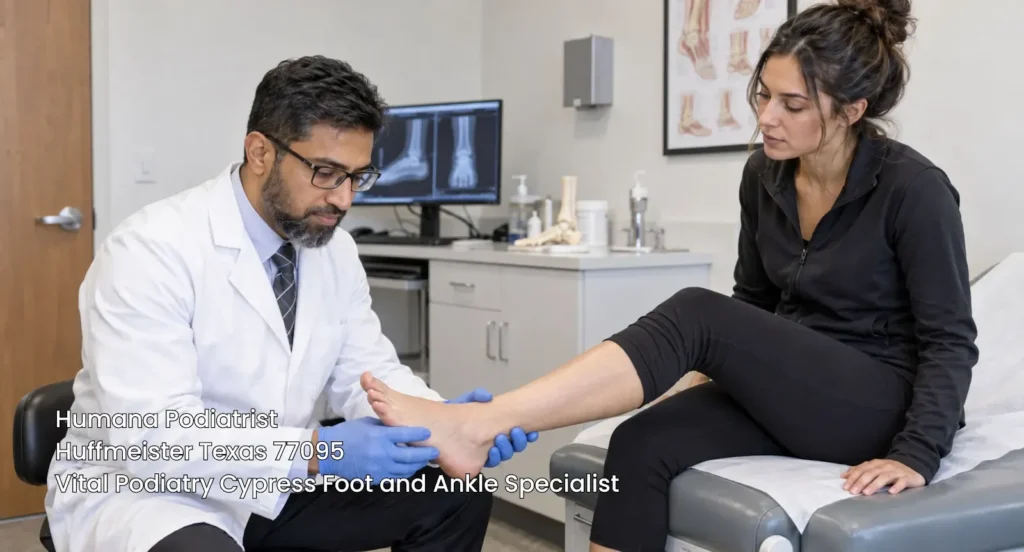
A Qutenza podiatrist in Houston applying a topical patch to a patient's foot for nerve pain relief during treatment.

What Happens During the Appointment?

Your provider will identify the painful treatment area and prepare your skin before treatment. A trained healthcare professional will then apply QUTENZA.

“We want every patient to understand what to expect before treatment begins.” — Dr. Tai, Vital Podiatry.

The provider may also check your blood pressure because QUTENZA can temporarily increase it. Tell your provider if the treatment causes significant discomfort. The healthcare team will supervise the entire process, and you should never apply or remove QUTENZA yourself.

Will Qutenza Hurt?

This is one of the most common concerns before a first visit.

QUTENZA can cause burning, pain, redness, or itching during and after application. Some patients experience substantial treatment-related pain. Your healthcare team can use cooling measures or appropriate pain medicine to help manage discomfort.

Tell your provider if discomfort becomes difficult to tolerate.

What Should You Do After Treatment?

Follow your podiatrist’s aftercare instructions. Treated skin may remain heat-sensitive for several days.

Avoid unnecessary heat exposure. Be careful with hot water, direct sunlight, and vigorous exercise if the area remains sensitive.

Seek medical attention for severe continuous pain or skin lesions such as blisters. Tell your provider about significant changes in sensation.

Understanding Qutenza Insurance Coverage

Treatment costs are worth discussing before scheduling. Ask your insurer about coverage, deductibles, copays, prior authorization, and possible out-of-pocket costs.

For practical guidance, review the Qutenza insurance coverage guide before contacting your insurer or provider.
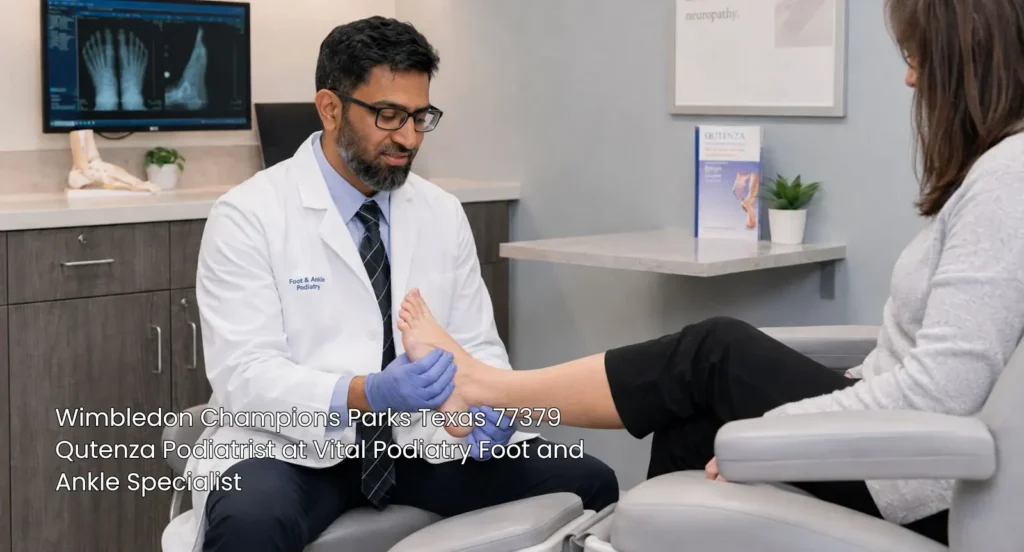
An expert Qutenza podiatrist in Houston examining a female patient's foot for diabetic neuropathy in a clinic setting.

Planning Your Visit in Wimbledon Champions Parks

If you’re looking for a Qutenza podiatrist in Wimbledon Champions Parks, plan your appointment around your comfort. Wear practical footwear and allow enough travel time, especially if walking is painful.

Vital Podiatry Foot and Ankle Specialist can discuss your symptoms, review your medical history, and help you understand appropriate next steps for your foot care.

A Useful Local Landmark

Collins Park can serve as a familiar local reference when planning your route. If foot pain makes walking difficult, give yourself extra time.

Check Your Location Before Leaving

The coordinates 30.01468,-95.50095 can help you identify the surrounding area in a navigation app. Check the route ahead for travel time and access points.

Use a Nearby Road Reference

Another useful navigation reference is Grand Wimbledon Dr & Cash Oaks Dr. This road crossing can help with local directions.

CALL US NOW!

(281) 937-4546

Directions to Vital Podiatry Foot and Ankle Specialist from Wimbledon Champions Parks

Get Ready for a More Informed Visit

Your first QUTENZA appointment doesn’t need to feel uncertain. Bring medication information, describe your symptoms, and ask about benefits, discomfort, aftercare, and costs.

Good preparation supports an informed conversation about foot pain. This can help you feel confident and ready to discuss your goals. If you’re ready to discuss your symptoms and treatment options, Book an appointment with Vital Podiatry Foot and Ankle Specialist.

FAQs

1. How long does QUTENZA treatment take?
For diabetic peripheral neuropathy of the feet, QUTENZA is applied for 30 minutes. Your appointment may take longer for preparation and post-treatment care.

2. Can QUTENZA be applied at home?
No. A healthcare professional must administer QUTENZA. Incorrect handling can irritate the skin, eyes, and airways.

3. How often can treatment be repeated?
QUTENZA should not be repeated more frequently than every three months. Your provider should set the schedule based on your symptoms and response.

4. What side effects should I watch for?
Redness, pain, and itching can occur around the application area. Tell your healthcare provider about severe pain, significant skin changes, or sensory changes.

5. Should I tell my podiatrist about numbness?
Yes. Numbness and changes in sensation are important, particularly with diabetic neuropathy. Tell your podiatrist about existing or new changes before treatment.

TAKE YOUR FIRST STEP

OR CALL US

(281) 937-4546

Related Post


If you’re searching for a Qutenza podiatrist, you probably want clear answers before your first appointment. QUTENZA is an 8% capsaicin topical system used by healthcare professionals for certain neuropathic pain conditions, including diabetic peripheral neuropathy of the feet.

Understanding the treatment process can help you feel more prepared for your appointment.

What Qutenza Actually Does

QUTENZA delivers capsaicin directly to the skin over painful nerves. It isn’t a daily pill or ordinary pain cream. A healthcare professional applies it in an office and monitors you during treatment.

In a diabetic peripheral neuropathy study, patients receiving QUTENZA had a 30% reduction in pain over 12 weeks, compared with 22% for placebo. In a separate post-shingles nerve pain study, QUTENZA produced a 29% reduction in average pain at Week 8. Results vary by patient.

Is Qutenza Right for Your Foot Pain?

Not every painful foot needs QUTENZA. Your provider should review your symptoms, medications, skin condition, and sensation.

Tell your podiatrist about numbness, open wounds, circulation problems, diabetes, allergies, and previous reactions to topical treatments. QUTENZA should not be applied to broken skin.

What to Bring to Vital Podiatry Foot and Ankle Specialist

If you live in or near  Wimbledon Champions Parks, bring a current medication list and any relevant medical records to your appointment. Before you arrive, think about how your foot pain feels. Is it burning, tingling, stabbing, or electric? When did it begin? Does walking make it worse? Does it affect your sleep? Sharing these details can help your podiatrist better understand your symptoms and plan the right approach for your care. 

A Qutenza podiatrist in Houston applying a topical patch to a patient's foot for nerve pain relief during treatment.

What Happens During the Appointment?

Your provider will identify the painful treatment area and prepare your skin before treatment. A trained healthcare professional will then apply QUTENZA.

“We want every patient to understand what to expect before treatment begins.” — Dr. Tai, Vital Podiatry.

The provider may also check your blood pressure because QUTENZA can temporarily increase it. Tell your provider if the treatment causes significant discomfort. The healthcare team will supervise the entire process, and you should never apply or remove QUTENZA yourself.

Will Qutenza Hurt?

This is one of the most common concerns before a first visit.

QUTENZA can cause burning, pain, redness, or itching during and after application. Some patients experience substantial treatment-related pain. Your healthcare team can use cooling measures or appropriate pain medicine to help manage discomfort.

Tell your provider if discomfort becomes difficult to tolerate.

What Should You Do After Treatment?

Follow your podiatrist’s aftercare instructions. Treated skin may remain heat-sensitive for several days.

Avoid unnecessary heat exposure. Be careful with hot water, direct sunlight, and vigorous exercise if the area remains sensitive.

Seek medical attention for severe continuous pain or skin lesions such as blisters. Tell your provider about significant changes in sensation.

Understanding Qutenza Insurance Coverage

Treatment costs are worth discussing before scheduling. Ask your insurer about coverage, deductibles, copays, prior authorization, and possible out-of-pocket costs.

For practical guidance, review the Qutenza insurance coverage guide before contacting your insurer or provider.

An expert Qutenza podiatrist in Houston examining a female patient's foot for diabetic neuropathy in a clinic setting.

Planning Your Visit in Wimbledon Champions Parks

If you’re looking for a Qutenza podiatrist in Wimbledon Champions Parks, plan your appointment around your comfort. Wear practical footwear and allow enough travel time, especially if walking is painful.

Vital Podiatry Foot and Ankle Specialist can discuss your symptoms, review your medical history, and help you understand appropriate next steps for your foot care.

A Useful Local Landmark

Collins Park can serve as a familiar local reference when planning your route. If foot pain makes walking difficult, give yourself extra time.

Check Your Location Before Leaving

The coordinates 30.01468,-95.50095 can help you identify the surrounding area in a navigation app. Check the route ahead for travel time and access points.

Use a Nearby Road Reference

Another useful navigation reference is Grand Wimbledon Dr & Cash Oaks Dr. This road crossing can help with local directions.

CALL US NOW!

(281) 937-4546

Directions to Vital Podiatry Foot and Ankle Specialist from Wimbledon Champions Parks

Get Ready for a More Informed Visit

Your first QUTENZA appointment doesn’t need to feel uncertain. Bring medication information, describe your symptoms, and ask about benefits, discomfort, aftercare, and costs.

Good preparation supports an informed conversation about foot pain. This can help you feel confident and ready to discuss your goals. If you’re ready to discuss your symptoms and treatment options, Book an appointment with Vital Podiatry Foot and Ankle Specialist.

FAQs

1. How long does QUTENZA treatment take?
For diabetic peripheral neuropathy of the feet, QUTENZA is applied for 30 minutes. Your appointment may take longer for preparation and post-treatment care.

2. Can QUTENZA be applied at home?
No. A healthcare professional must administer QUTENZA. Incorrect handling can irritate the skin, eyes, and airways.

3. How often can treatment be repeated?
QUTENZA should not be repeated more frequently than every three months. Your provider should set the schedule based on your symptoms and response.

4. What side effects should I watch for?
Redness, pain, and itching can occur around the application area. Tell your healthcare provider about severe pain, significant skin changes, or sensory changes.

5. Should I tell my podiatrist about numbness?
Yes. Numbness and changes in sensation are important, particularly with diabetic neuropathy. Tell your podiatrist about existing or new changes before treatment.