Why You Should See A Bunion Treatment Doctor Instead Of Self-Treating

February 19, 2026

Bunions are one of the most commonly misunderstood foot conditions. Many people see them as nothing more than an annoying bump or a cosmetic flaw. Because of that misconception, they often attempt to manage bunions on their own using pads, splints, or pain relievers. While these approaches may provide temporary comfort, they rarely address the true problem.

The reality is that bunions are progressive structural deformities. They change how your foot functions, how you walk, and eventually how your entire body moves. 

If you live in or around White Oak Falls, access to professional podiatric care gives you an opportunity to stop bunions before they interfere with your mobility, independence, and quality of life.

Seeing a bunion treatment doctor is not a last resort. It is often the smartest first step.

Understanding Bunions: More Than a Simple Bump

What Is a Bunion, Really?

A bunion is not extra bone growth, and it is not a surface-level issue. Medically, a bunion is a deformity of the metatarsophalangeal joint at the base of the big toe. As this joint becomes unstable, the big toe gradually drifts inward toward the other toes while the joint itself pushes outward.

An easy way to picture this is to imagine a wheel that is slightly out of alignment. At first, the car still drives, but the tire wears unevenly. Over time, the steering suffers, fuel efficiency drops, and eventually major repairs are required. A bunion follows the same pattern—what starts as a small misalignment leads to widespread problems if left uncorrected.

Why Bunions Get Worse Over Time

Bunions are progressive because the forces that cause them never stop. Walking, standing, exercising, and even shifting your weight all place stress on the misaligned joint. Ligaments stretch beyond their natural limits, muscles begin compensating incorrectly, and the joint slowly loses stability.

As years pass, cartilage wears down and inflammation becomes chronic. Many untreated bunions eventually develop arthritis, making the joint stiff, painful, and far more difficult to treat conservatively.
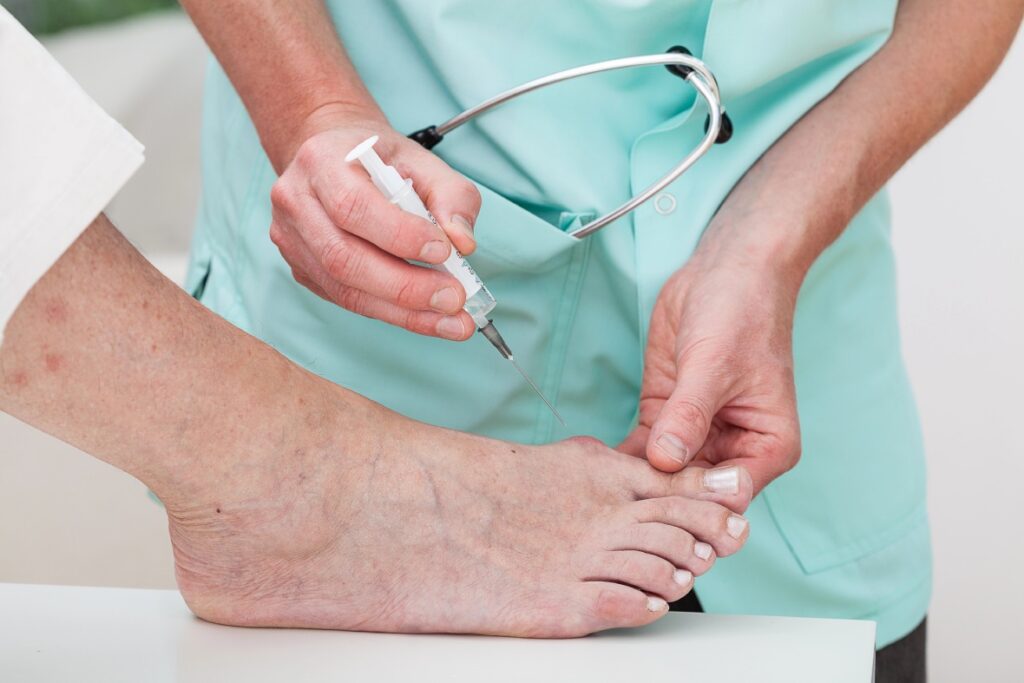
Professional bunion treatment doctors Cypress performing a precision cortisone injection for foot pain relief.

The Temptation of Self-Treating Bunions

Popular DIY Bunion Remedies People Try

Self-treatment feels appealing because it is accessible and inexpensive upfront. Many people turn to store-bought products or online advice hoping for a simple fix. Unfortunately, most DIY remedies focus on symptom relief rather than structural correction.

Bunion Pads, Splints, and Toe Separators

Bunion pads cushion the protruding joint and reduce shoe friction. Splints and toe separators attempt to straighten the big toe, but only while they are worn. Once removed, the foot immediately returns to its misaligned position.

This is similar to holding a leaning bookshelf upright with your hands. The moment you let go, gravity takes over again.

Over-the-Counter Pain Relievers

Pain relievers can reduce inflammation, but they also mask warning signs. When pain is dulled, people often continue wearing improper shoes or staying overly active, unknowingly accelerating joint damage.

Why Self-Treatment Often Fails

Self-treatment fails because bunions are biomechanical problems. They involve bones, joints, ligaments, muscles, and movement patterns. Without evaluating how the foot functions as a system, DIY approaches are incomplete and often misleading.

Hidden Dangers of Ignoring Professional Care

Structural Damage Beneath the Skin

As bunions progress, pressure shifts to other areas of the foot. This often leads to secondary issues such as hammertoes, overlapping toes, thick calluses, and inflammation in nearby joints. The joint capsule itself can thicken and stiffen, limiting motion permanently.

Long-Term Mobility Issues

Chronic foot pain changes how people walk. Over time, compensation patterns place abnormal stress on the knees, hips, and lower back. What begins as a foot problem can quietly evolve into widespread joint pain, balance issues, and increased fall risk.

Why Seeing a Bunion Treatment Doctor Matters

Accurate Diagnosis Matters

Not all bunions are the same. Some are flexible and respond well to conservative treatment, while others are rigid and advanced. A bunion treatment doctor evaluates joint alignment, range of motion, foot structure, and walking mechanics to determine severity and cause.

Accurate diagnosis prevents wasted time and ineffective treatments.

Customized Treatment Plans

Professional care is never one-size-fits-all. A treatment plan for an athlete differs from one for someone who stands all day at work or someone managing arthritis. Personalization leads to better outcomes and fewer setbacks.

Advanced Medical Treatments vs DIY Fixes

Non-Surgical Medical Treatments

Non-surgical care may include custom orthotics, targeted exercises, footwear modification, and inflammation management. These approaches work together to stabilize the joint, redistribute pressure, and slow or halt progression.

For many patients, conservative care provides long-term relief without surgery.

When Surgery Becomes Necessary

Surgery is considered when pain interferes with daily life and conservative care is no longer effective. Modern bunion surgery focuses on correcting alignment and restoring joint balance—not just removing the bump.

Benefits of Early Intervention

Stopping Progression Before Surgery Is Needed

Early treatment interrupts the cycle of instability before permanent damage occurs. Addressing bunions early often preserves joint flexibility and prevents severe deformity.

Improving Daily Comfort and Quality of Life

Early care improves everyday activities such as walking, exercising, standing at work, and wearing normal shoes. These small improvements compound into long-term independence.

How Foot Specialists Approach Bunion Care

Gait Analysis and Biomechanics

Foot specialists analyze how your foot strikes the ground, how weight transfers, and how joints move during walking. This reveals the mechanical forces that contributed to bunion formation.

Orthotics and Footwear Guidance

Custom orthotics stabilize foot mechanics, while footwear guidance helps patients avoid shoes that worsen deformities. Together, they protect the joint during daily activities.

The Role of Footwear in Bunion Development and Recovery

Why Shoes Can Make or Break Your Bunion Health

Footwear plays a critical role in both the development and progression of bunions. Narrow toe boxes, high heels, and rigid soles force the big toe inward and increase pressure on the joint. Over time, this repeated stress accelerates misalignment.

Supportive, well-fitted shoes with a wide toe box can significantly reduce irritation and slow progression. While shoes alone cannot reverse a bunion, the wrong shoes can undo even the best treatment plan.

How Bunions Affect Overall Body Alignment and Posture

Why a Foot Problem Can Lead to Knee, Hip, and Back Pain

The feet form the foundation of the body. When bunions alter how weight is distributed, the effects ripple upward. Altered gait patterns place uneven stress on the knees, hips, and spine.

Over time, this can lead to chronic joint pain, muscle fatigue, and reduced balance—especially in older adults.

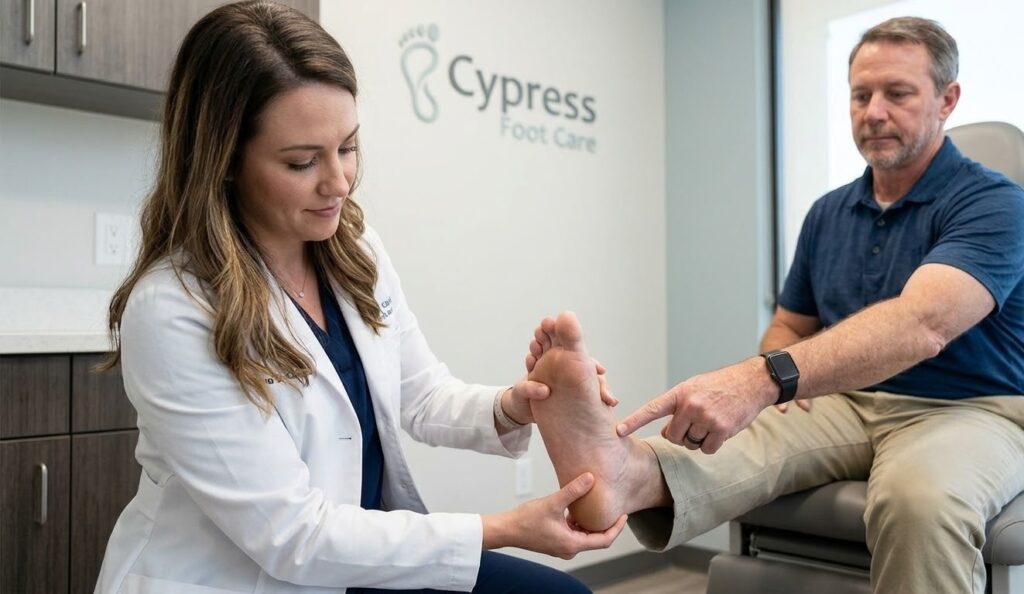
Expert bunion treatment doctors Cypress performing a physical foot examination to assess joint misalignment.

The Emotional and Lifestyle Impact of Living With Untreated Bunions

How Chronic Foot Pain Quietly Changes Your Daily Life

Bunion pain doesn’t just affect walking—it affects choices. People stop exercising, avoid travel, decline social activities, and limit shoe options. Over time, frustration and reduced activity can affect mental well-being and confidence.

Professional care restores not just comfort, but freedom.

What to Expect During Your First Bunion Doctor Visit

Removing the Fear and Uncertainty Around Professional Care

Many people delay care because they fear surgery or bad news. In reality, the first visit is often conservative and educational. The doctor evaluates your foot, explains the condition clearly, and discusses non-surgical options whenever possible.

Understanding the process reduces anxiety and empowers better decisions.

Choosing the Right Specialist in White Oak Falls

Local Expertise Matters

Local specialists understand community lifestyles, work demands, and activity levels. Accessibility also improves follow-up care, which is essential for long-term success.

Vital Podiatry Cypress Foot and Ankle Specialist: Expert Bunion Care You Can Trust

When expert bunion care is needed, Vital Podiatry Cypress Foot and Ankle Specialist provides comprehensive evaluation and evidence-based treatment focused on preserving mobility and long-term foot health.

Patient-Centered, Evidence-Based Treatment

Care emphasizes conservative treatment first, patient education, and shared decision-making. Patients understand their condition and actively participate in treatment choices.

Common Myths About Bunions Debunked

“Bunions Are Just Cosmetic”

Bunions are structural deformities that affect joint health, mobility, and long-term independence.

“Surgery Is Always the First Option”

Surgery is typically a last resort. Most bunions are managed conservatively for years with excellent results.

When Should You See a Doctor for a Bunion?

Early Warning Signs You Shouldn’t Ignore

Persistent pain, swelling, redness, stiffness, difficulty wearing shoes, or reduced toe motion all signal the need for professional evaluation.

Vital Podiatry Cypress Foot and Ankle Specialist Serving the White Oak Falls Community and Beyond in Cypress

Vital Podiatry Cypress Foot and Ankle Specialist is dedicated to serving the diverse needs of the local community of Cypress, including individuals residing in neighborhoods like White Oak Falls. With its convenient location near landmarks such as the Cypress Falls High School and major intersections like Hempstead Rd and Huffmeister Rd (coordinates: 29.921372991970404, -95.62916320000001), we offer bunion treatment doctors Cypress services.

Get Bunion Treatment Doctors Service at White Oak Falls Now

CALL US NOW!

(281) 937-4546

Navigate from White Oak Falls to Vital Podiatry Cypress Foot and Ankle Specialist Now

Your Feet Deserve Professional Care

Self-treating bunions may feel convenient, but it often delays effective care and increases long-term damage. Professional treatment addresses the root cause, preserves mobility, and protects your quality of life.

Your feet support you every day. Treating them with expert care is an investment in your future independence.

FAQs

1. Can bunions stop progressing?
Yes, early professional care can slow or halt progression.

2. Are bunion splints effective long-term?
They offer temporary relief but do not correct deformity.

3. How long does conservative treatment take?
Many patients notice improvement within weeks.

4. Is bunion surgery always necessary?
No. Most cases are managed without surgery.

5. Can bunions return after treatment?
Proper care significantly reduces recurrence risk.

TAKE YOUR FIRST STEP

OR CALL US

(281) 937-4546

Related Post


Bunions are one of the most commonly misunderstood foot conditions. Many people see them as nothing more than an annoying bump or a cosmetic flaw. Because of that misconception, they often attempt to manage bunions on their own using pads, splints, or pain relievers. While these approaches may provide temporary comfort, they rarely address the true problem.

The reality is that bunions are progressive structural deformities. They change how your foot functions, how you walk, and eventually how your entire body moves. 

If you live in or around White Oak Falls, access to professional podiatric care gives you an opportunity to stop bunions before they interfere with your mobility, independence, and quality of life.

Seeing a bunion treatment doctor is not a last resort. It is often the smartest first step.

Understanding Bunions: More Than a Simple Bump

What Is a Bunion, Really?

A bunion is not extra bone growth, and it is not a surface-level issue. Medically, a bunion is a deformity of the metatarsophalangeal joint at the base of the big toe. As this joint becomes unstable, the big toe gradually drifts inward toward the other toes while the joint itself pushes outward.

An easy way to picture this is to imagine a wheel that is slightly out of alignment. At first, the car still drives, but the tire wears unevenly. Over time, the steering suffers, fuel efficiency drops, and eventually major repairs are required. A bunion follows the same pattern—what starts as a small misalignment leads to widespread problems if left uncorrected.

Why Bunions Get Worse Over Time

Bunions are progressive because the forces that cause them never stop. Walking, standing, exercising, and even shifting your weight all place stress on the misaligned joint. Ligaments stretch beyond their natural limits, muscles begin compensating incorrectly, and the joint slowly loses stability.

As years pass, cartilage wears down and inflammation becomes chronic. Many untreated bunions eventually develop arthritis, making the joint stiff, painful, and far more difficult to treat conservatively.

Professional bunion treatment doctors Cypress performing a precision cortisone injection for foot pain relief.

The Temptation of Self-Treating Bunions

Popular DIY Bunion Remedies People Try

Self-treatment feels appealing because it is accessible and inexpensive upfront. Many people turn to store-bought products or online advice hoping for a simple fix. Unfortunately, most DIY remedies focus on symptom relief rather than structural correction.

Bunion Pads, Splints, and Toe Separators

Bunion pads cushion the protruding joint and reduce shoe friction. Splints and toe separators attempt to straighten the big toe, but only while they are worn. Once removed, the foot immediately returns to its misaligned position.

This is similar to holding a leaning bookshelf upright with your hands. The moment you let go, gravity takes over again.

Over-the-Counter Pain Relievers

Pain relievers can reduce inflammation, but they also mask warning signs. When pain is dulled, people often continue wearing improper shoes or staying overly active, unknowingly accelerating joint damage.

Why Self-Treatment Often Fails

Self-treatment fails because bunions are biomechanical problems. They involve bones, joints, ligaments, muscles, and movement patterns. Without evaluating how the foot functions as a system, DIY approaches are incomplete and often misleading.

Hidden Dangers of Ignoring Professional Care

Structural Damage Beneath the Skin

As bunions progress, pressure shifts to other areas of the foot. This often leads to secondary issues such as hammertoes, overlapping toes, thick calluses, and inflammation in nearby joints. The joint capsule itself can thicken and stiffen, limiting motion permanently.

Long-Term Mobility Issues

Chronic foot pain changes how people walk. Over time, compensation patterns place abnormal stress on the knees, hips, and lower back. What begins as a foot problem can quietly evolve into widespread joint pain, balance issues, and increased fall risk.

Why Seeing a Bunion Treatment Doctor Matters

Accurate Diagnosis Matters

Not all bunions are the same. Some are flexible and respond well to conservative treatment, while others are rigid and advanced. A bunion treatment doctor evaluates joint alignment, range of motion, foot structure, and walking mechanics to determine severity and cause.

Accurate diagnosis prevents wasted time and ineffective treatments.

Customized Treatment Plans

Professional care is never one-size-fits-all. A treatment plan for an athlete differs from one for someone who stands all day at work or someone managing arthritis. Personalization leads to better outcomes and fewer setbacks.

Advanced Medical Treatments vs DIY Fixes

Non-Surgical Medical Treatments

Non-surgical care may include custom orthotics, targeted exercises, footwear modification, and inflammation management. These approaches work together to stabilize the joint, redistribute pressure, and slow or halt progression.

For many patients, conservative care provides long-term relief without surgery.

When Surgery Becomes Necessary

Surgery is considered when pain interferes with daily life and conservative care is no longer effective. Modern bunion surgery focuses on correcting alignment and restoring joint balance—not just removing the bump.

Benefits of Early Intervention

Stopping Progression Before Surgery Is Needed

Early treatment interrupts the cycle of instability before permanent damage occurs. Addressing bunions early often preserves joint flexibility and prevents severe deformity.

Improving Daily Comfort and Quality of Life

Early care improves everyday activities such as walking, exercising, standing at work, and wearing normal shoes. These small improvements compound into long-term independence.

How Foot Specialists Approach Bunion Care

Gait Analysis and Biomechanics

Foot specialists analyze how your foot strikes the ground, how weight transfers, and how joints move during walking. This reveals the mechanical forces that contributed to bunion formation.

Orthotics and Footwear Guidance

Custom orthotics stabilize foot mechanics, while footwear guidance helps patients avoid shoes that worsen deformities. Together, they protect the joint during daily activities.

The Role of Footwear in Bunion Development and Recovery

Why Shoes Can Make or Break Your Bunion Health

Footwear plays a critical role in both the development and progression of bunions. Narrow toe boxes, high heels, and rigid soles force the big toe inward and increase pressure on the joint. Over time, this repeated stress accelerates misalignment.

Supportive, well-fitted shoes with a wide toe box can significantly reduce irritation and slow progression. While shoes alone cannot reverse a bunion, the wrong shoes can undo even the best treatment plan.

How Bunions Affect Overall Body Alignment and Posture

Why a Foot Problem Can Lead to Knee, Hip, and Back Pain

The feet form the foundation of the body. When bunions alter how weight is distributed, the effects ripple upward. Altered gait patterns place uneven stress on the knees, hips, and spine.

Over time, this can lead to chronic joint pain, muscle fatigue, and reduced balance—especially in older adults.

Expert bunion treatment doctors Cypress performing a physical foot examination to assess joint misalignment.

The Emotional and Lifestyle Impact of Living With Untreated Bunions

How Chronic Foot Pain Quietly Changes Your Daily Life

Bunion pain doesn’t just affect walking—it affects choices. People stop exercising, avoid travel, decline social activities, and limit shoe options. Over time, frustration and reduced activity can affect mental well-being and confidence.

Professional care restores not just comfort, but freedom.

What to Expect During Your First Bunion Doctor Visit

Removing the Fear and Uncertainty Around Professional Care

Many people delay care because they fear surgery or bad news. In reality, the first visit is often conservative and educational. The doctor evaluates your foot, explains the condition clearly, and discusses non-surgical options whenever possible.

Understanding the process reduces anxiety and empowers better decisions.

Choosing the Right Specialist in White Oak Falls

Local Expertise Matters

Local specialists understand community lifestyles, work demands, and activity levels. Accessibility also improves follow-up care, which is essential for long-term success.

Vital Podiatry Cypress Foot and Ankle Specialist: Expert Bunion Care You Can Trust

When expert bunion care is needed, Vital Podiatry Cypress Foot and Ankle Specialist provides comprehensive evaluation and evidence-based treatment focused on preserving mobility and long-term foot health.

Patient-Centered, Evidence-Based Treatment

Care emphasizes conservative treatment first, patient education, and shared decision-making. Patients understand their condition and actively participate in treatment choices.

Common Myths About Bunions Debunked

“Bunions Are Just Cosmetic”

Bunions are structural deformities that affect joint health, mobility, and long-term independence.

“Surgery Is Always the First Option”

Surgery is typically a last resort. Most bunions are managed conservatively for years with excellent results.

When Should You See a Doctor for a Bunion?

Early Warning Signs You Shouldn’t Ignore

Persistent pain, swelling, redness, stiffness, difficulty wearing shoes, or reduced toe motion all signal the need for professional evaluation.

Vital Podiatry Cypress Foot and Ankle Specialist Serving the White Oak Falls Community and Beyond in Cypress

Vital Podiatry Cypress Foot and Ankle Specialist is dedicated to serving the diverse needs of the local community of Cypress, including individuals residing in neighborhoods like White Oak Falls. With its convenient location near landmarks such as the Cypress Falls High School and major intersections like Hempstead Rd and Huffmeister Rd (coordinates: 29.921372991970404, -95.62916320000001), we offer bunion treatment doctors Cypress services.

Get Bunion Treatment Doctors Service at White Oak Falls Now

CALL US NOW!

(281) 937-4546

Navigate from White Oak Falls to Vital Podiatry Cypress Foot and Ankle Specialist Now

Your Feet Deserve Professional Care

Self-treating bunions may feel convenient, but it often delays effective care and increases long-term damage. Professional treatment addresses the root cause, preserves mobility, and protects your quality of life.

Your feet support you every day. Treating them with expert care is an investment in your future independence.

FAQs

1. Can bunions stop progressing?
Yes, early professional care can slow or halt progression.

2. Are bunion splints effective long-term?
They offer temporary relief but do not correct deformity.

3. How long does conservative treatment take?
Many patients notice improvement within weeks.

4. Is bunion surgery always necessary?
No. Most cases are managed without surgery.

5. Can bunions return after treatment?
Proper care significantly reduces recurrence risk.